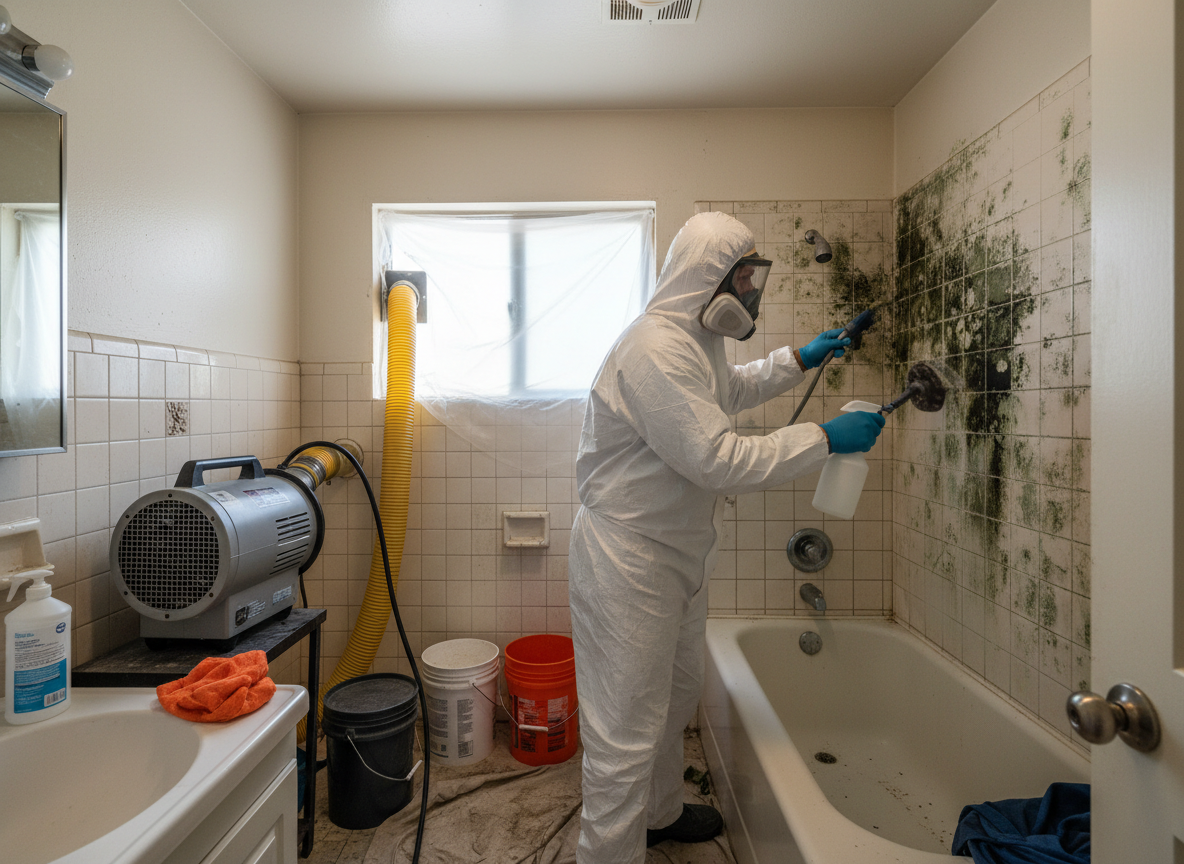
Bathroom mold in Midway City often starts behind shower tile or under vanities where the mild Mediterranean climate keeps indoor humidity elevated even in winter. Older homes common along Beach Boulevard frequently have original drywall or particleboard backing that absorbs moisture from daily showers without adequate exhaust. Technicians must cut out affected sections rather than surface-treat, because mold roots penetrate the paper facing on gypsum board and travel into framing members near the slab.
Containment is critical in these compact bathrooms to prevent spores from reaching adjacent bedrooms or the hallway HVAC system. Plastic sheeting sealed with negative air machines protects living spaces while HEPA filtration captures particles during demolition. In Garden Grove border properties, crews also check for hidden leaks at the toilet flange or tub trap, since shifting soil in the flat Orange County terrain can crack cast-iron drains and feed ongoing moisture.
After removal, antimicrobial application and drying with commercial dehumidifiers prevent regrowth. Post-remediation air sampling confirms clearance before new tile or drywall is installed. Homeowners are advised against bleach-only cleaning, which leaves roots intact and can damage grout in older Midway City bathrooms without addressing the ventilation shortfall that the local climate exacerbates year-round.
Technician insight
In Midway City, the thing that catches most people out with bathroom mold removal service is how the mild Mediterranean climate keeps humidity high enough year-round that even small leaks behind 1970s tile work allow mold to spread into the drywall backing long before any musty smell reaches the hallway.
Hidden Growth Behind Shower in Midway City Home
Owner reported dark spots along the tub edge near Westminster border. Inspection revealed mold extending into the original drywall behind the tile because of missing exhaust fan use. Crew removed the affected section, treated framing, and verified clearance before new tile installation.
How it works
- 1
On-Site Assessment
Inspect all bathroom surfaces, test moisture levels in walls and flooring, and identify hidden growth behind tile or cabinetry.
- 2
Containment Setup
Seal the bathroom with plastic barriers and operate negative air machines to keep spores from migrating into living areas.
- 3
Removal and Cleaning
Cut out contaminated drywall or substrate, HEPA vacuum surfaces, and apply EPA-registered antimicrobials to framing.
- 4
Drying and Verification
Run commercial dehumidifiers, then perform air sampling to confirm the space meets clearance standards before rebuild.
Pricing
Upfront quotes provided after inspection; final cost depends on extent of hidden growth and materials removed.