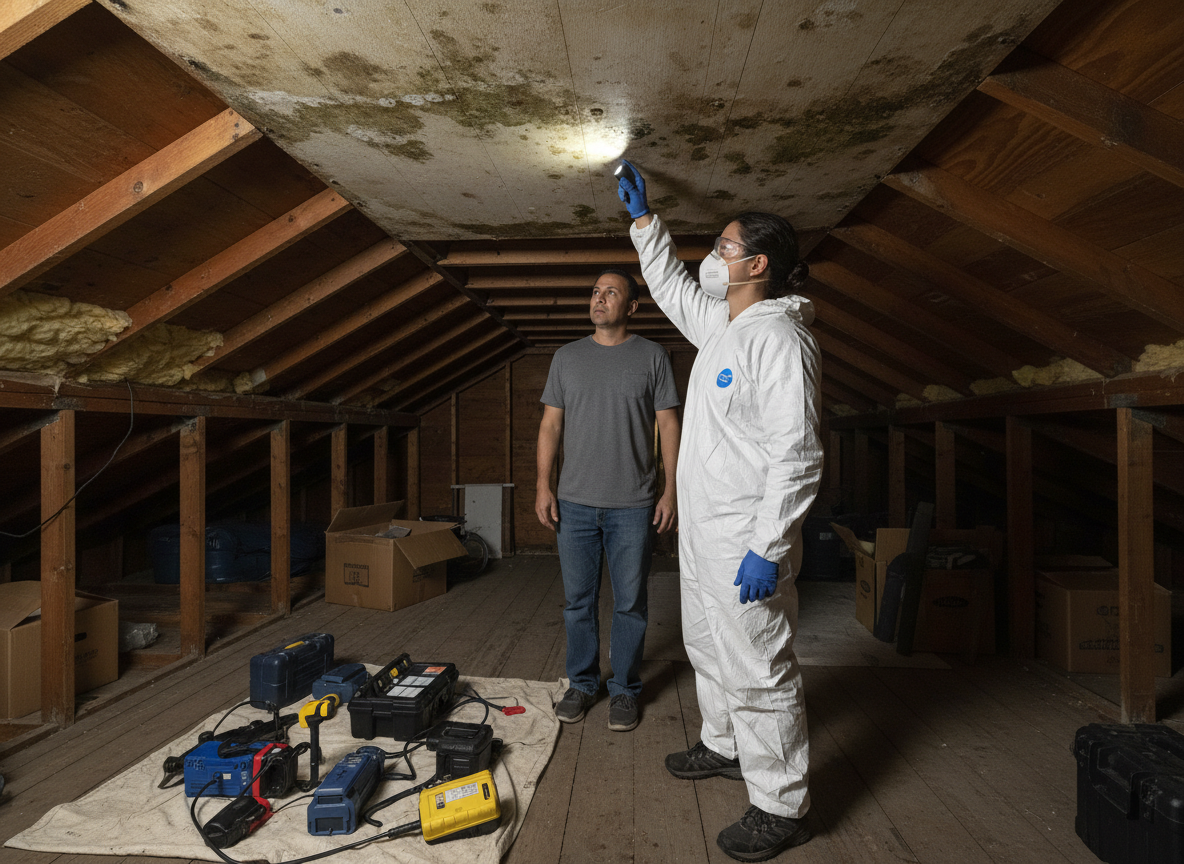
Midway City homes built in the 1950s and 1960s often feature raised foundations and limited crawl-space ventilation that traps humidity from the mild Mediterranean climate. During inspection we use moisture meters and borescopes to check behind baseboards, inside HVAC returns, and along stucco-to-wood transitions common on Beach Boulevard properties. These older builds frequently show condensation issues where rooflines meet exterior walls, especially after the occasional heavy winter rain.
Garden Grove and Westminster tract homes share similar construction details, including single-pane windows and slab-on-grade additions that create cold spots. We map temperature differentials and look for efflorescence on concrete that signals ongoing moisture migration. Inspections also cover attic insulation where coastal fog can deposit enough moisture to support surface growth on roof sheathing without obvious leaks.
Edge cases include post-1990s remodels where new drywall was installed over existing plaster without proper vapor barriers, allowing mold to develop in the cavity. We note any code-related ventilation shortfalls under current Orange County requirements and flag areas where residents have added enclosed patios that reduce airflow around the original structure.
Technician insight
In Midway City the thing that catches most people out with home mold inspection is how the mild Mediterranean climate keeps crawl spaces under 1960s Beach Blvd tract homes damp enough for hidden growth behind drywall even when the house feels dry upstairs.
Hidden Growth Behind Added Bathroom
A Westminster homeowner noticed a musty smell after extending a bathroom into an enclosed patio. We found elevated moisture along the original exterior wall where new framing trapped condensation. Targeted probing confirmed mold in the cavity; the report guided focused removal that avoided opening unaffected rooms.
How it works
- 1
Initial Walk-Through
We examine every room, attic access, and crawl space entry while noting visible water stains, musty odors, and prior repair locations.
- 2
Moisture and Humidity Mapping
Readings are taken at multiple points on walls, floors, and ceilings to identify hidden damp areas typical in Midway City homes.
- 3
Targeted Probing and Sampling
Where moisture is confirmed, small inspection holes or tape lifts allow direct checks for growth without unnecessary demolition.
- 4
Written Report and Recommendations
Findings are documented with photos and locations, followed by clear next steps for remediation or further testing.
Pricing
Cost depends on square footage, number of stories, and whether crawl-space or attic access is required.