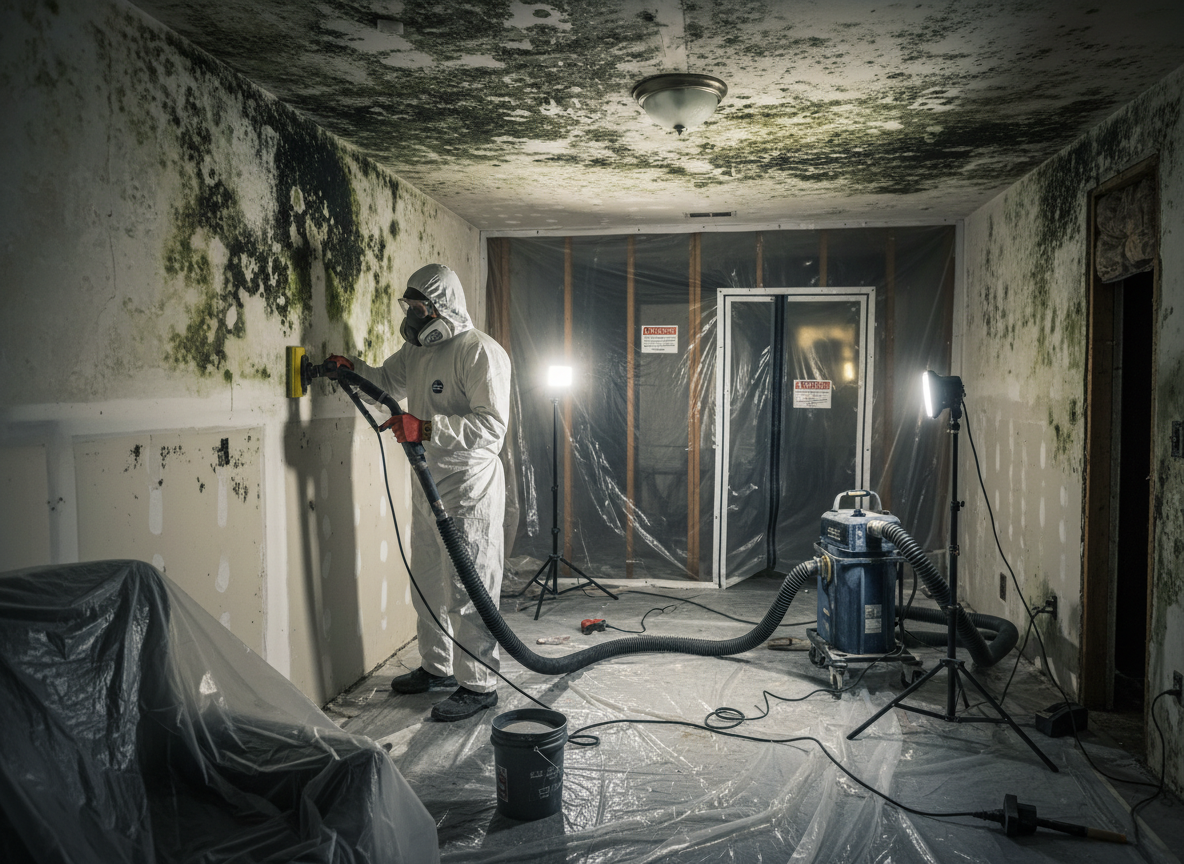
Midway City homes often feature stucco exteriors and crawlspaces built before modern vapor barriers became standard. These structures trap condensation from the mild Mediterranean climate, especially during winter fog rolling in from the coast. Abatement crews must open walls carefully to avoid spreading spores into living spaces while checking for rot in wooden framing that sits close to soil. Removing affected drywall and insulation requires negative air machines to keep particles contained within the property boundaries.
Garden Grove and Westminster border properties share similar drainage challenges where flat lots allow water to pool near foundations after rare heavy rains. Mold abatement here frequently involves treating cellulose materials in attics where poor ventilation lets humidity linger year-round. Technicians test surface and air samples before and after work to confirm clearance, paying close attention to HVAC systems that can distribute spores across connected rooms in these compact ranch layouts.
Edge cases include mold behind bathroom tile in homes with original plumbing from the 1950s, where leaks travel along joists without visible ceiling stains. Proper abatement means discarding porous materials rather than attempting surface cleaning and then applying antimicrobial coatings only after drying verification. Local code requires proper disposal of contaminated debris to prevent cross-contamination at landfills serving Orange County.
Technician insight
In Midway City, the thing that catches most people out with mold abatement is how 1960s stucco homes trap moisture from coastal fog behind the paper-faced drywall, so what looks like a small bathroom spot often turns into full wall replacement once we pull the baseboards.
Crawlspace Growth Near Westminster Line
Homeowner reported persistent musty odor after minor roof leak. Inspection revealed mold on insulation and joists in the crawlspace fed by poor grading common on flat Midway City lots. Crew contained the space, removed contaminated materials, dried the soil area, and added ventilation. Follow-up testing showed clearance with no return of odor.
How it works
- 1
Initial Assessment
Inspect all accessible areas including attics, crawlspaces, and wall cavities using moisture meters and borescopes to map the full extent of growth.
- 2
Containment Setup
Isolate the work zone with plastic sheeting and negative air pressure to prevent spores from migrating into unaffected parts of the Midway City home.
- 3
Removal and Cleaning
Discard porous materials, HEPA vacuum surfaces, and wipe non-porous items with appropriate solutions before final drying.
- 4
Verification and Prevention
Conduct post-remediation testing and advise on ventilation fixes or dehumidification suited to the area's coastal humidity patterns.
Pricing
Pricing varies with the square footage involved, hidden damage discovered during opening walls, and any required follow-up drying equipment.