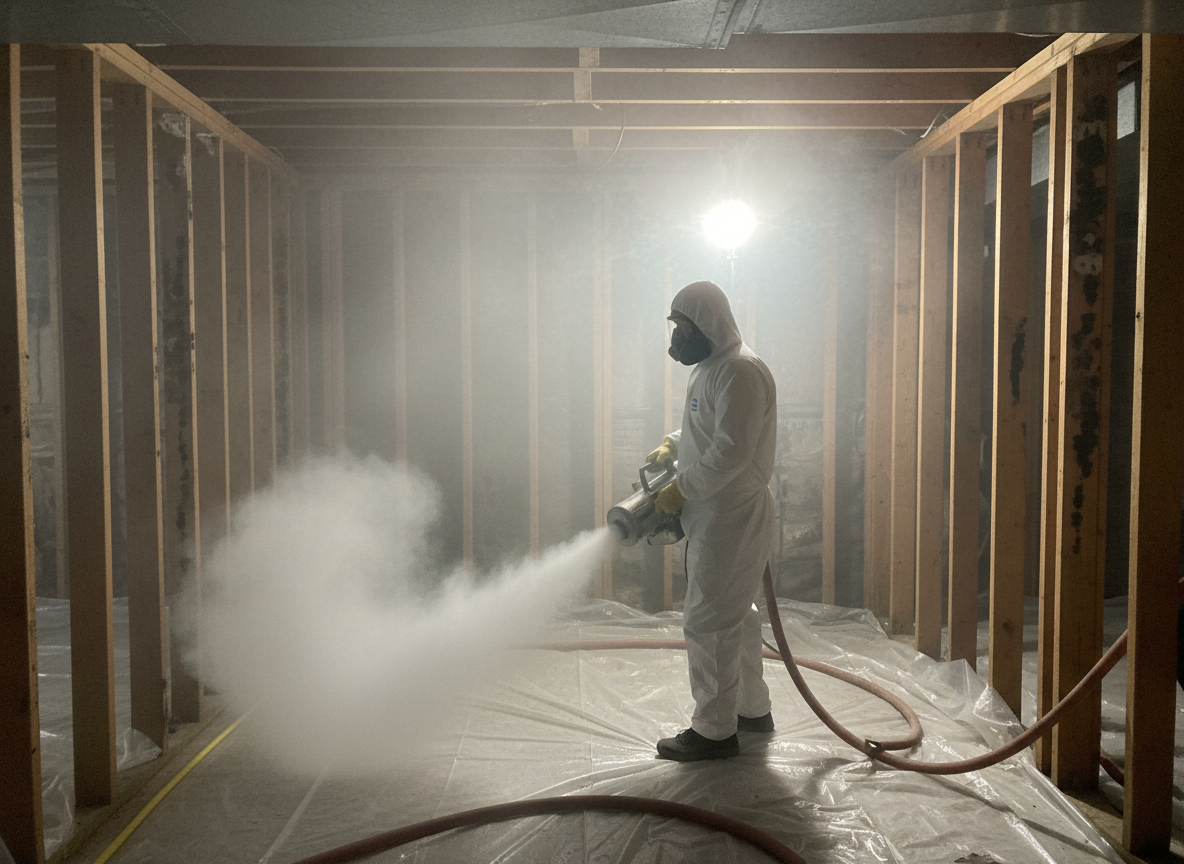
Mold fogging treatment uses a fine mist of EPA-registered antimicrobial solution dispersed under pressure to reach cavities behind drywall, inside HVAC ducts, and under subfloors where surface cleaning cannot reach. In Midway City’s older single-family homes built before 1970 near Beach Boulevard, moisture from the mild Mediterranean climate often condenses in unvented crawlspaces and wall voids, allowing hidden colonies to form after minor leaks from aging plumbing. The fog particles are sized to stay airborne long enough to contact surfaces yet settle without leaving residue that would require additional cleanup.
Technicians first contain the work area with plastic sheeting and negative air machines to prevent cross-contamination into living spaces, then run the fogger for timed intervals based on cubic footage. Post-treatment, air sampling confirms spore reduction before containment is removed. Because Garden Grove and Westminster border Midway City, jobs frequently involve shared-wall townhomes where fog must be applied carefully to avoid drift into neighboring units. Homeowners should keep pets and sensitive individuals out for at least four hours after the process.
Edge cases include porous materials like carpet padding or insulation that absorb the solution and may still need removal if staining or odor persists. Fogging is not a substitute for fixing the water source; any active leak from roof valleys or window seals common in the area must be corrected first. The treatment works best on non-cellulose surfaces and in spaces with good air circulation, which is why attics in Midway City homes often respond well while saturated drywall does not.
Seasonal timing matters because the region’s dry summers reduce ambient humidity and allow faster drying after fogging, while winter rains can reintroduce moisture if gutters and downspouts are clogged. Technicians inspect for these conditions before starting so the treatment holds.
Technician insight
In Midway City the thing that catches most people out with mold fogging treatment is the older crawlspaces under 1960s homes along Beach Boulevard; they trap humidity from the mild climate even when the rest of the house feels dry, so fog alone fails if you skip sealing the vents and adding a dehumidifier afterward.
Hidden Growth Behind Kitchen Cabinets
A Westminster-border home in Midway City called after a slow sink leak caused musty odors. Inspection found colonies inside wall cavities and under the subfloor. We contained the kitchen, corrected the plumbing, then applied fog through small access points. Clearance tests passed and the odor did not return.
How it works
- 1
Initial Containment And Inspection
Seal off affected rooms with plastic barriers and negative air pressure, then locate all visible and hidden growth using moisture meters and borescopes.
- 2
Source Correction
Address any active leaks or ventilation issues in crawlspaces and attics before fogging begins.
- 3
Fog Application
Disperse antimicrobial fog into wall cavities, ducts, and subfloor areas for complete coverage.
- 4
Clearance Testing
Run air samples after treatment and remove containment once results confirm reduced spore levels.
Pricing
Cost depends on square footage treated and number of cavities accessed; most Midway City jobs require an on-site assessment for accurate pricing.