Midway City sits in a mild Mediterranean climate where consistent humidity supports mold growth even without major storms. Older housing stock along Beach Boulevard and side streets often features crawl spaces and attics with limited ventilation that trap moisture from coastal air. When leaks occur from aging plumbing or roof penetrations common in homes built before the 1980s, mold spreads quickly behind drywall and under flooring. Technicians must account for these tight access points and the proximity to Garden Grove and Westminster where similar construction patterns repeat.
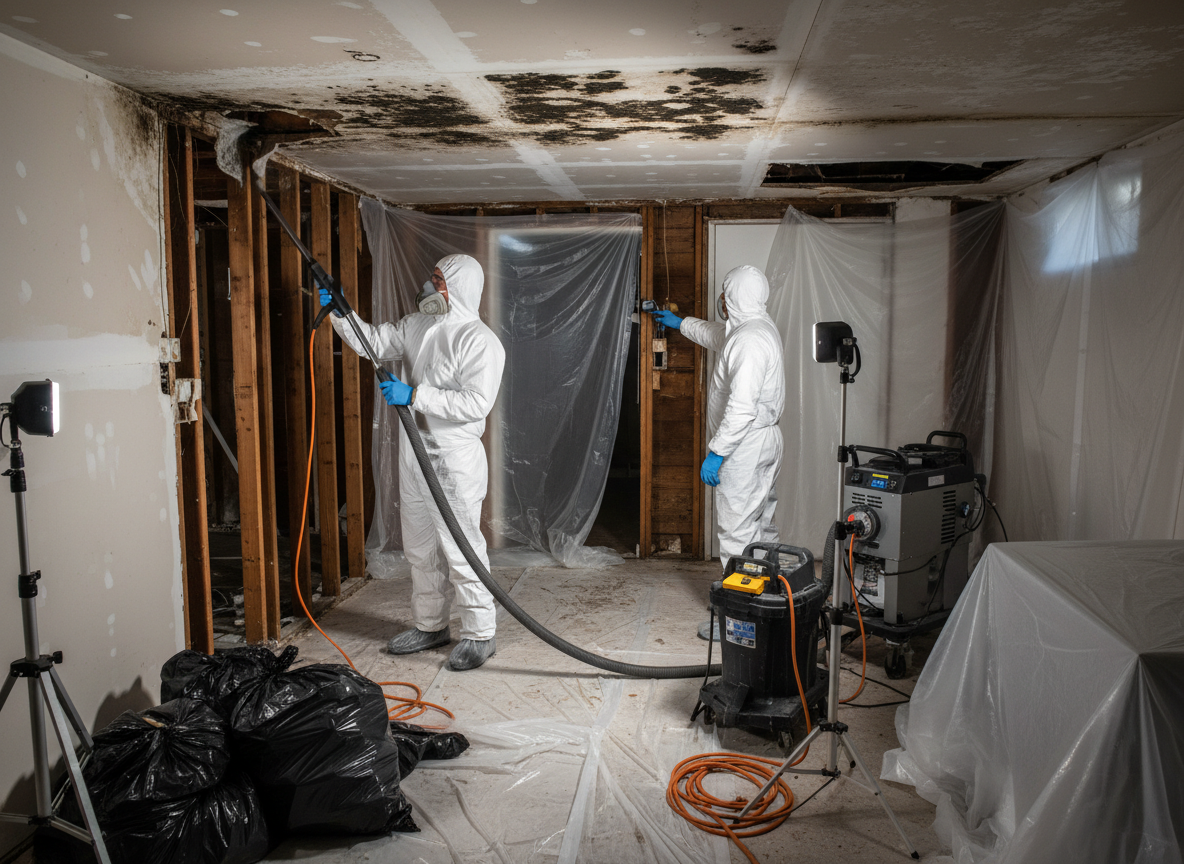
Remediation work here requires careful containment because many Midway City properties sit close together on small lots. Removing affected drywall or insulation can disturb settled spores that travel easily through shared wall cavities. Local soil stays relatively moist year-round, so any foundation crack allows water to wick upward and restart colonies after treatment. Crews focus on drying the structure completely before sealing, using dehumidifiers sized for the square footage rather than generic equipment that leaves hidden damp pockets.
Homeowners in the area frequently mistake surface discoloration for the full extent of the problem. In reality, mold often extends into insulation and subflooring where it feeds on paper backing. Proper protocol includes negative air machines to keep spores from migrating into living spaces during removal. After cleanup, source identification prevents repeat growth, especially around bathroom exhausts that vent into attics rather than outside.
Technician insight
In Midway City, the thing that catches most people out with mold remediation company is how the mild Mediterranean climate keeps humidity elevated enough that mold returns in crawl spaces if the original roof or plumbing leak is not fixed at the same time.
Attic Growth After Roof Leak
A Midway City homeowner reported a musty odor near the hallway. Inspection revealed water had entered through a cracked roof flashing and soaked insulation above the master bedroom. We removed the wet insulation, dried the joists, and sealed the entry point. The odor disappeared and no new growth appeared after seasonal rains.
How it works
- 1
Initial Assessment
Technician inspects all accessible areas including attics, crawl spaces, and wall cavities to map moisture sources and visible growth.
- 2
Containment Setup
Plastic barriers and negative air pressure isolate the work zone so spores do not spread to unaffected rooms.
- 3
Material Removal
Affected drywall, insulation, and flooring are cut out and bagged for disposal following local waste guidelines.
- 4
Drying and Treatment
Industrial air movers and dehumidifiers dry the structure, followed by antimicrobial application on remaining surfaces.
- 5
Final Clearance
Moisture readings confirm dryness and air sampling verifies spore levels have returned to normal before barriers come down.
Pricing
Pricing varies by affected square footage, accessibility of crawl spaces or attics, and whether hidden growth requires additional demolition.