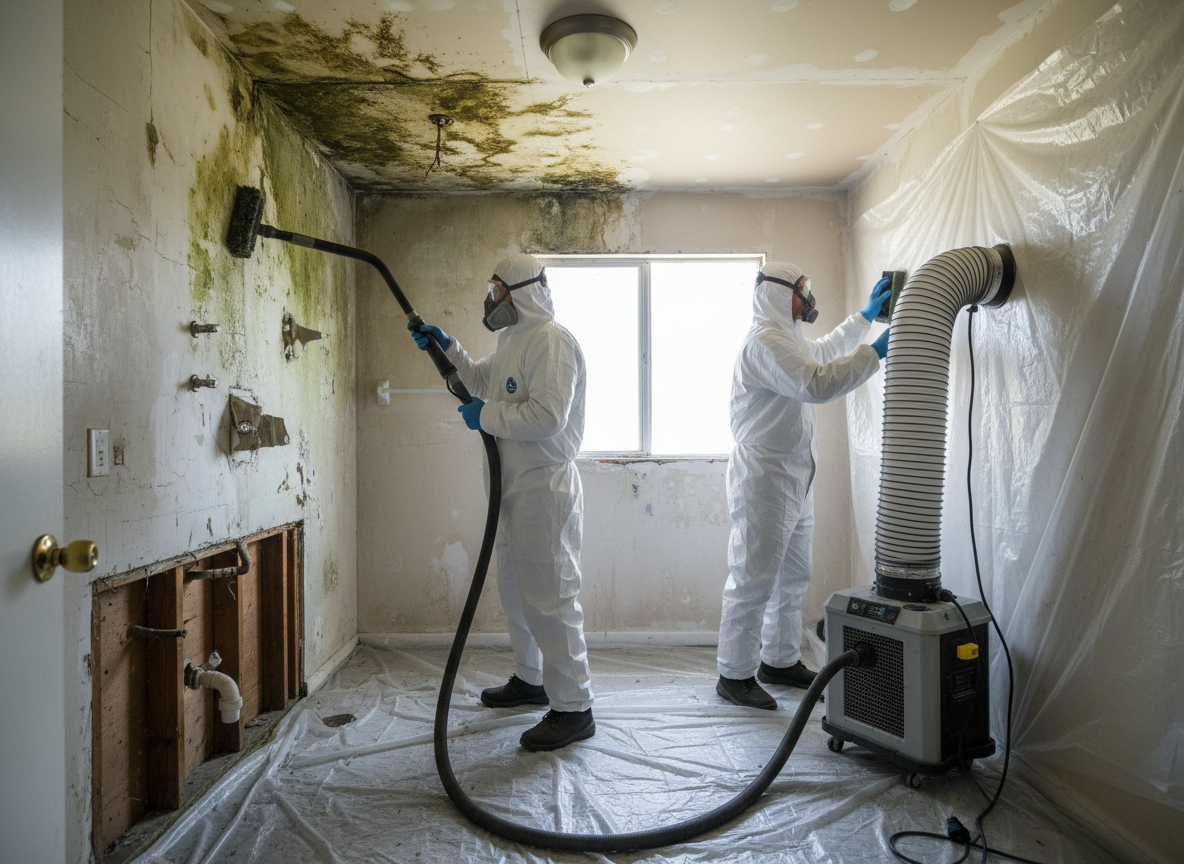
Midway City homes built in the mid-century era often feature stucco exteriors and crawlspaces that trap moisture from coastal humidity even under mild Mediterranean conditions. When a roof leak or plumbing drip occurs, the consistent temperatures prevent rapid drying, allowing mold to colonize drywall, subflooring, and insulation before homeowners notice musty odors. Professional removal begins with identifying these concealed pockets rather than relying on surface cleaning alone.
Garden Grove and Westminster properties share similar construction patterns with Midway City, including slab-on-grade foundations that can wick ground moisture during rare heavy rains. Edge cases arise when HVAC ducts run through unconditioned attics; condensation forms on metal surfaces and drips onto ceiling joists, creating hidden colonies that standard visual inspections miss. Containment protocols must account for the tight lot spacing common in these neighborhoods to avoid cross-contamination between adjacent homes.
Removal work here frequently involves negative-air machines exhausting through windows facing side yards rather than busy Beach Boulevard frontages. After physical removal of affected materials, technicians focus on drying wall cavities to below 12 percent moisture content before any new drywall installation. Homeowners sometimes attempt bleach wipes on visible spots, but this leaves roots intact inside porous wood framing typical of local tract homes.
Technician insight
In Midway City, the thing that catches most people out with professional mold removal is hidden colonies behind stucco in the older tract homes here. The mild Mediterranean climate keeps temperatures steady but never fully dries out the occasional plumbing leak or roof drip, so growth spreads along sill plates before any musty smell reaches living areas.
Crawlspace Growth After Minor Leak
A Westminster homeowner noticed a damp odor near the laundry room. Inspection revealed a slow drip from an old galvanized pipe that had soaked the subfloor and joists in the crawlspace common to Midway City homes. The crew isolated the area, removed saturated insulation and affected wood sections, then dried the remaining structure before sealing the pipe. Odors disappeared and moisture readings stayed low on follow-up.
How it works
- 1
Initial Assessment
Technicians inspect attics, crawlspaces, and wall cavities using moisture meters and borescopes to map the full extent of growth in Midway City homes.
- 2
Containment Setup
Plastic barriers and negative air pressure isolate the work zone, protecting adjacent rooms and neighboring properties common on Midway City's smaller lots.
- 3
Removal and Cleaning
Affected porous materials are removed while non-porous surfaces receive HEPA vacuuming and antimicrobial treatment to eliminate residual spores.
- 4
Drying and Verification
Dehumidifiers and air movers bring moisture levels to safe thresholds, followed by post-remediation testing before reconstruction begins.
Pricing
Upfront quotes provided after on-site inspection based on square footage and access conditions.