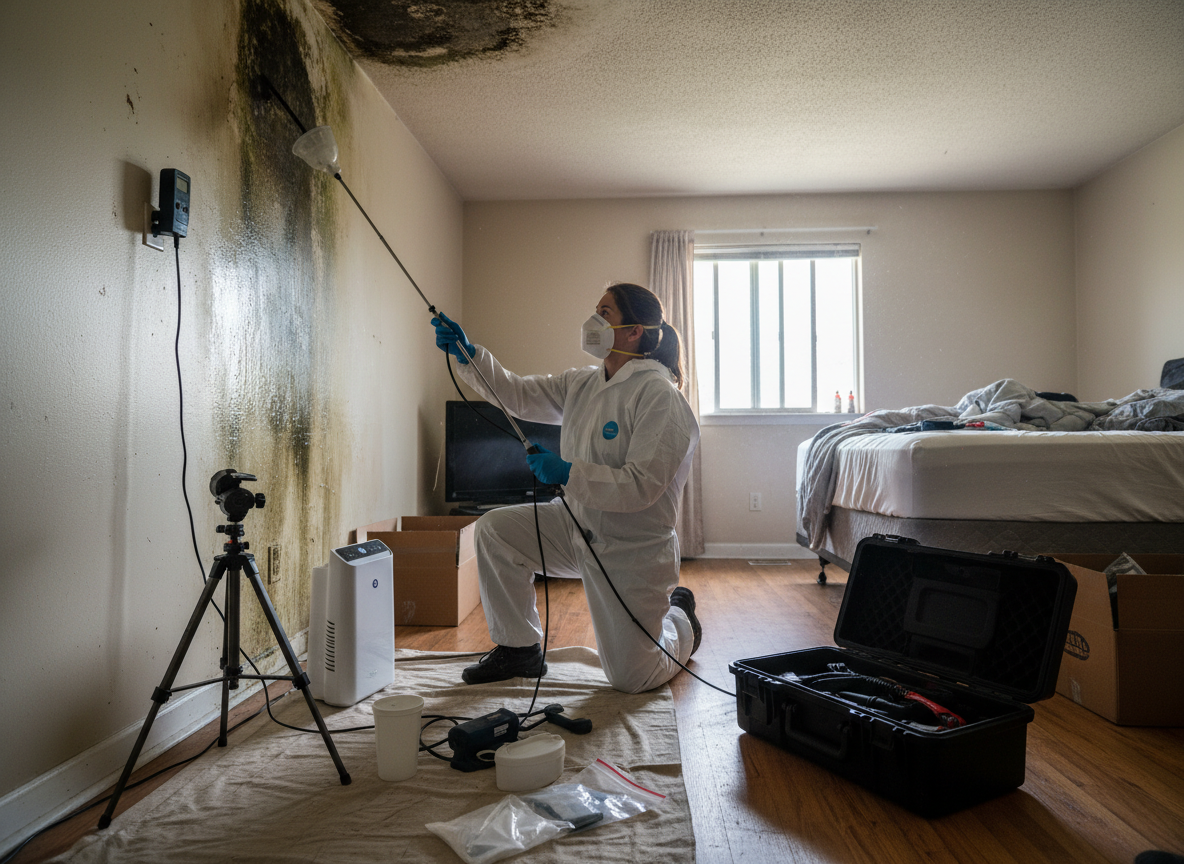
Midway City homes often feature older construction with crawl spaces and attics that trap moisture from the region's mild Mediterranean climate, allowing mold to develop unseen behind drywall or under flooring. Testing begins with visual inspection followed by air and surface sampling using calibrated equipment to identify spore types and concentrations specific to local humidity patterns. Homes bordering Garden Grove frequently show elevated readings near plumbing penetrations due to shared water lines and seasonal fog that raises indoor moisture levels without obvious leaks.
Edge cases in Midway City include testing post-rainfall when spores become airborne in poorly sealed tract homes built before updated ventilation codes took effect. Materials like older lath and plaster walls can hide growth that standard visual checks miss, requiring borescope examination through small access points. Results guide whether remediation is needed or if simple moisture control suffices, avoiding unnecessary disruption in tight Orange County lots where neighboring properties limit exterior access.
Regulatory notes emphasize following Orange County health guidelines for reporting elevated mold in rental units, with documentation provided for insurance or tenant disputes. Homeowners near Westminster should note that testing during peak summer dryness can understate winter risks when coastal breezes carry additional moisture inland. Accurate sampling locations account for HVAC systems that distribute spores throughout single-story ranch homes common in the area.
Technician insight
In Midway City, the thing that catches most people out with Residential mold testing is how the mild Mediterranean climate keeps crawl spaces under 1960s tract homes near Beach Blvd consistently damp enough for hidden growth even when indoor humidity reads normal, especially on lots bordering Garden Grove where poor grading funnels runoff under foundations.
Musty Odor After Fog Event
A Midway City homeowner near Westminster reported persistent musty smells following coastal fog. Testing located elevated spores in the attic insulation of the older home. Samples confirmed the source tied to roof vents allowing moisture entry. Targeted removal of affected material resolved the issue without whole-home disruption.
How it works
- 1
Initial Assessment
Review property history and symptoms with the homeowner at the Midway City address to identify likely moisture sources tied to local weather patterns.
- 2
On-Site Sampling
Collect air, surface, and bulk samples from targeted areas like attics and crawl spaces using industry-standard protocols.
- 3
Laboratory Analysis
Send samples to an accredited lab for spore identification and concentration reporting within standard turnaround times.
- 4
Report Delivery
Provide a detailed written report with findings, photos, and recommendations tailored to Orange County building practices.
- 5
Follow-Up Guidance
Discuss results and next steps, including coordination with remediation if elevated levels are confirmed.
Pricing
Pricing varies by number of samples and home size with upfront quotes provided before work begins.