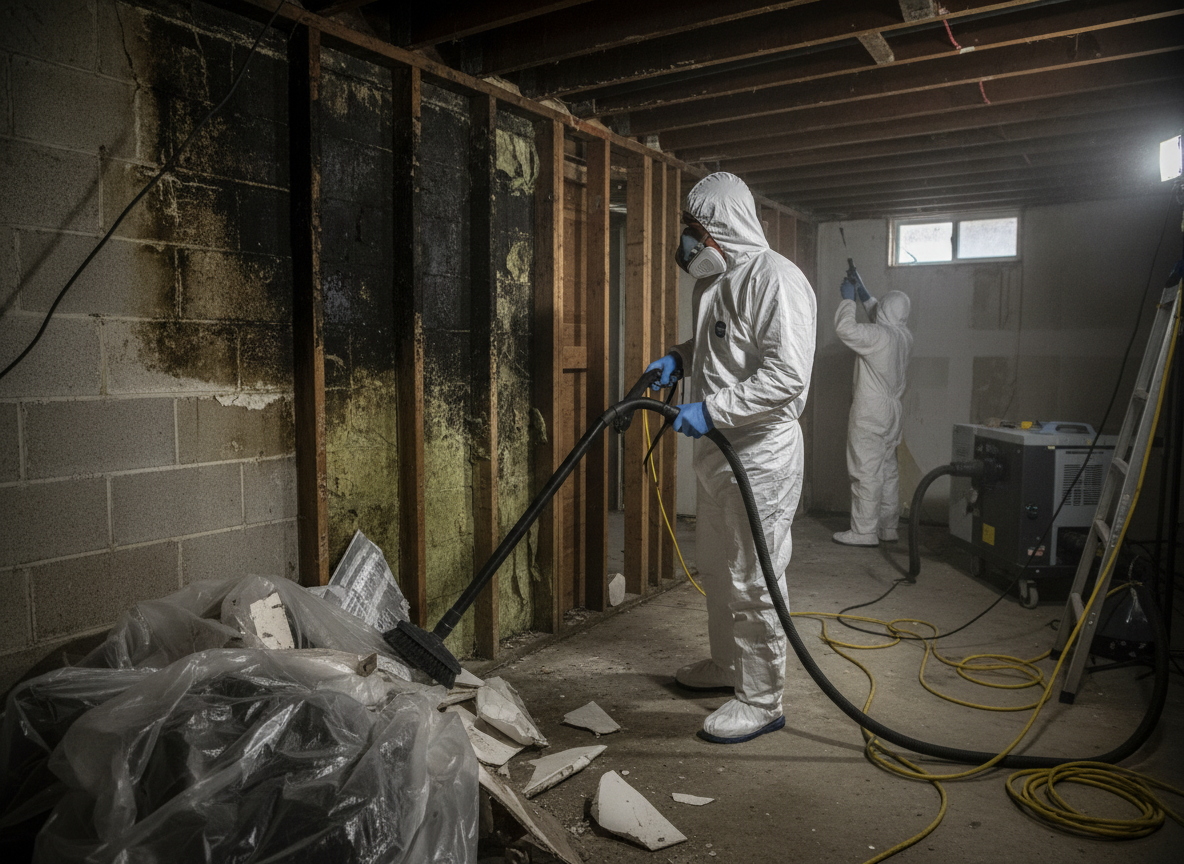
Midway City homes built before the 1980s often feature lath-and-plaster walls and limited crawl-space ventilation along Beach Boulevard corridors. When leaks occur from aging plumbing or roof penetrations, the mild Mediterranean climate keeps temperatures in the 60-75 degree range year-round, allowing black mold colonies to establish behind baseboards and in attic insulation without obvious musty odors reaching living areas. Remediation crews must map moisture with infrared cameras and remove affected drywall sections in full containment rather than surface treatments alone.
Garden Grove and Westminster border properties share similar tract-home construction with slab-on-grade foundations that trap irrigation runoff during rare winter rains. This creates edge cases where mold travels through HVAC ducts into multiple rooms. Technicians isolate the system, use negative air machines with HEPA filtration, and dispose of porous materials at licensed Orange County facilities. Homeowners should expect post-remediation air sampling to confirm spore counts have returned to outdoor baseline levels before any reconstruction begins.
Code compliance in Midway City requires proper disposal documentation and occupant relocation when contamination exceeds ten square feet. Crews wear full PPE and seal off work zones with six-mil plastic to prevent cross-contamination into unaffected living spaces. Skipping these steps often leads to repeated growth within months because residual spores settle in carpet pads or behind cabinets that were never opened during initial cleaning.
Technician insight
In Midway City the thing that catches most people out with toxic mold removal is the slab-edge moisture that travels under stucco homes built in the 1960s along the Westminster border. Our mild year-round temperatures keep the ground damp enough for colonies to hide in the subfloor for years until a small plumbing leak finally triggers visible growth.
Hidden Growth Behind Kitchen Cabinets
A Midway City homeowner noticed a faint odor near the sink after heavy winter rains. Inspection found water had wicked under the slab and wicked into particleboard cabinets. We contained the kitchen, removed the lower cabinets and base drywall, dried the subfloor, and verified clearance with air sampling before the owner reinstalled new cabinetry.
How it works
- 1
Initial Assessment
Technicians arrive within hours, use moisture meters and borescopes to locate hidden growth in walls, attics and crawl spaces typical of Midway City tract homes.
- 2
Containment Setup
Plastic barriers and negative air pressure isolate the affected zone to keep spores from migrating into clean areas of the property.
- 3
Removal and Disposal
Contaminated drywall, insulation and baseboards are cut out, double-bagged and removed for proper landfill disposal in Orange County facilities.
- 4
Drying and Verification
Industrial dehumidifiers and air scrubbers run until moisture levels drop below 15 percent; clearance testing confirms the space is safe for re-entry.
Pricing
Cost depends on square footage affected, depth of hidden growth and whether HVAC cleaning is required; inspection provides a detailed written scope.