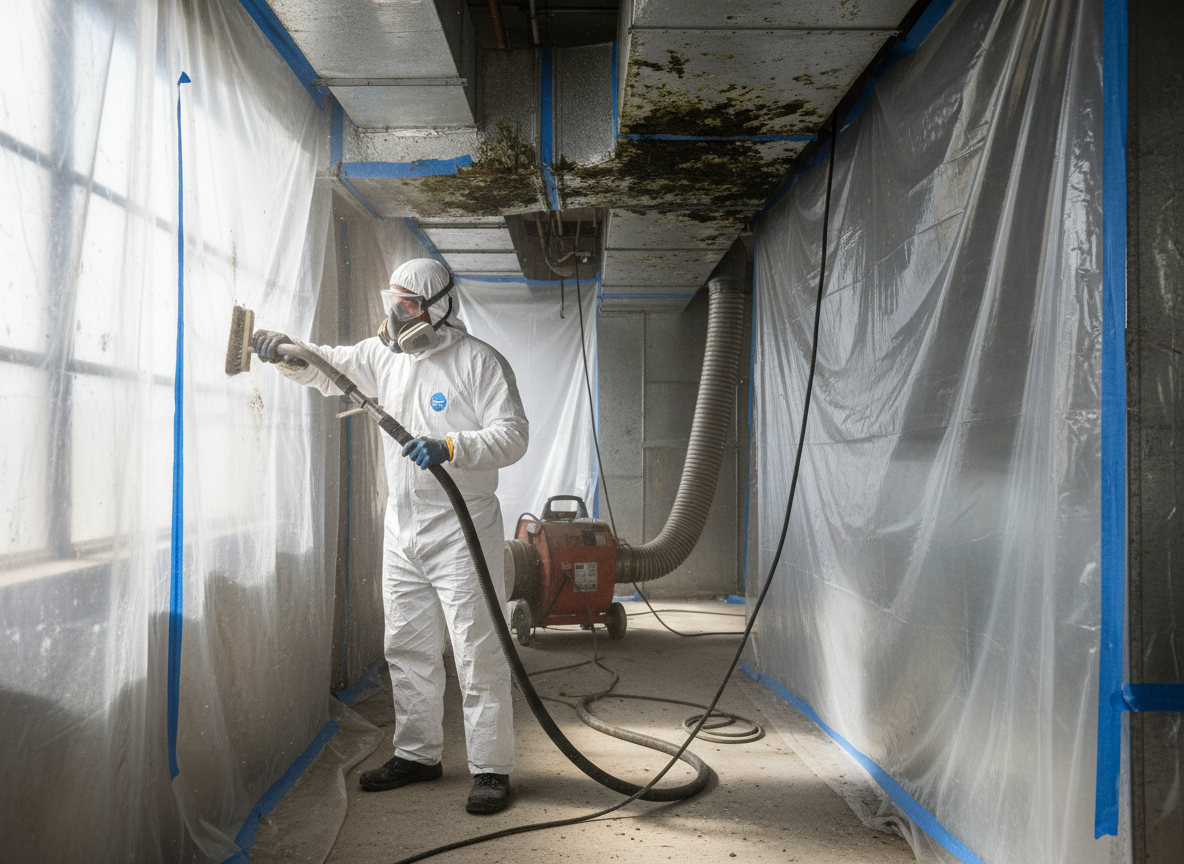
Ventilation mold remediation in Midway City targets growth inside HVAC ducts, registers, and attic vents common in the area's post-war ranch homes and stucco builds. The mild Mediterranean climate keeps humidity moderate most of the year, yet winter fog from the coast and occasional heavy rains allow moisture to linger in poorly sealed systems. Technicians use containment barriers, negative air machines, and HEPA filtration to prevent spores from spreading into living spaces during removal. Edge cases include mold behind flexible ductwork that requires full section replacement rather than surface cleaning, especially in homes near Garden Grove where older insulation traps condensation.
Local regulations in Orange County require proper disposal of contaminated materials and documentation of moisture sources before final clearance testing. Homeowners often overlook crawlspace vents connected to central systems, allowing spores to recirculate after rain events. We inspect supply and return lines with borescopes, remove visible colonies with antimicrobial agents safe for residential use, and address the root cause such as leaking roof penetrations or clogged condensate drains. Skipping these steps leads to rapid regrowth once the system restarts.
Materials matter: rigid metal ducts respond better to mechanical brushing than flexible lines, which we often replace outright. In Midway City neighborhoods, tree pollen and dust from nearby Westminster streets accelerate buildup inside filters and coils, creating ideal conditions for mold when temperatures drop. We always verify airflow after remediation to confirm the system no longer distributes contaminants.
Homeowners should expect multiple access points cut into drywall or attic spaces, followed by sealing and insulation repairs. This work differs from whole-home remediation because it focuses on the mechanical path rather than visible walls or floors.
Technician insight
In Midway City, the thing that catches most people out with ventilation mold remediation is older flex duct running through unconditioned attics where coastal fog condenses overnight. Homeowners run the AC year-round and never notice until the smell hits every room. We end up replacing more line than cleaning because once it collapses from moisture it cannot be salvaged.
Westminster Road Home with Recirculating Odor
A Midway City resident reported musty air only when the furnace kicked on after a winter rain. Inspection found black growth inside return ducts connected to a roof vent that had leaked for months. We isolated the system, removed and replaced the affected flex sections, treated the rigid trunk lines, and sealed the roof penetration. Follow-up testing showed spore counts returned to outdoor levels and the odor did not return.
How it works
- 1
Initial Inspection
Technicians arrive at the Midway City address and use borescopes plus moisture meters to map mold inside ducts and vents without full system shutdown.
- 2
Containment Setup
Negative air machines and plastic barriers isolate the HVAC from living areas to stop spore migration during cleaning.
- 3
Removal and Cleaning
HEPA vacuuming, mechanical brushing, and EPA-registered antimicrobials treat rigid ducts; flexible sections showing heavy growth are cut out and replaced.
- 4
Source Correction
Technicians identify and document moisture sources such as roof leaks or poor attic ventilation common in Orange County homes before final sealing.
- 5
Clearance Testing
Post-remediation air samples confirm spore levels match outdoor baselines before the system returns to normal operation.
Pricing
Cost depends on system size, number of access points required, and whether duct sections need replacement.